Articles
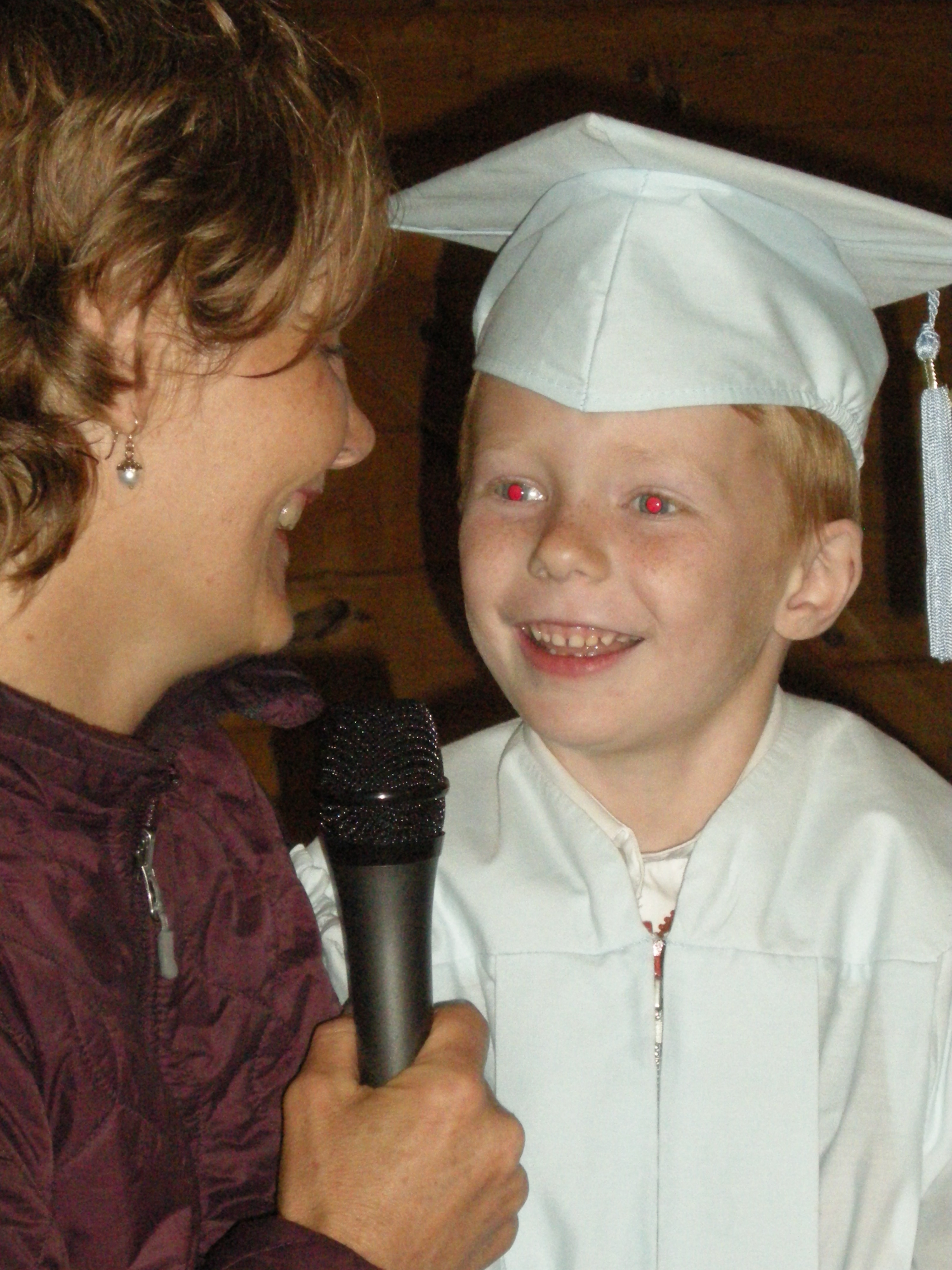
This article was published in the March 2011 issue of Montana Parent
The Child-Teacher Relationship: The Way to the Mind is Through the Heart by Maureen Bright
On a shelf in my classroom is a small golden chest, lined with red velvet. In it are many treasures like cut out hearts, cards full of hearts, a shiny ribbon and a handwritten note that reads, “Thank you for understanding me.” Each item is a precious pearl – a reminder of when a student has given me their heart for safekeeping.
Thirty years of working with children has shown me that the way to a child’s mind is through their heart.
Children are not designed to follow strangers, which is why I start cultivating a relationship with my students before their first day of school, by meeting their parents. When parents – their children’s first and best teachers – introduce me to their child during a home or school visit, I become part of the village necessary for raising their child. This is a simple ritual, but one that is often overlooked.
I provide whatever is needed to let my students rest in the sense that they are under the wing of a caring, responsible adult who will protect their dignity and tender heart.
I have a relationship with each student drawing out their interests at their level and pace – reassuring them that I’m alongside. I want them to feel a generous invitation to exist fully in my presence and to be their own person.
Why do I delight in helping my students feel seen, known and understood? Because each child is a treasure. And I am aware that I can only guide them along life’s way if I have their heart. When they look to me as a compass, and a source of comfort and guidance, it becomes possible to clear the impediments to their growth and maturation.
“Sit Still and Listen” by Judith Bluestone, Founder of The HANDLE Institute
For some children, “Sit still and listen” are two contradictory statements. For the child who needs movement to keep her vestibular* system alert, and thus energized so she can listen, following the direction to sit still means tuning out and missing the learning that is taking place.
In the classroom, this student might be observed stretching, yawning, pushing off from the table, bouncing her head around, rocking from side to side in her chair, getting up and jumping from time to time, or engaging in other fast and sudden movements. She is not trying to be distracting or showing boredom, but is compensating so she can focus on the auditory or visual demands of learning. She knows what the teacher wants and that it’s important that she listen, so she moves and bounces to keep her vestibular system alert and energized so she can listen.
Other symptoms might include motion sickness, avoidance of carnival rides, merry-go-rounds, and swings. Even watching things move might cause dizziness or nausea. Difficulty reading or writing in cursive might occur because of the circular movement. Another child will use excessive movement to dull vestibular feedback to avoid feeling overwhelmed, by spinning himself or watching things spin, but doesn’t get dizzy or nauseous.
These children’s behaviors are often seen as disruptive or defiant when they are actually self-protective, which is why behavior modification isn’t effective. Drug therapies mask or plug behaviors, with the risk of different or more violent behaviors emerging later on, because the underlying problems have not been dealt with.
The HANDLE® Institute provides a non-drug approach that looks for root causes behind learning and behavioral challenges that make daily life difficult. Using simple activities to strengthen those areas of the nervous system that are found to be weak or are not connecting with other areas of the nervous system, doors are opened to academic, behavioral, social, professional, and vocational success.
*Vestibular System, in simplified terms, is the inner ear. It’s combined perceptions give us three dimensional organization in space, telling us where we are, what we’re hearing, what we’re seeing, and how we’re going to respond. Stimulation of the system is induced not only by sound, but more significantly by movement (in particular rotational movement), responses to gravity, and altered kinesthetic states. Directly or indirectly it is responsible for nearly all of our motor functions and some of our sensory functions.
 Secret Garden Montessori School